
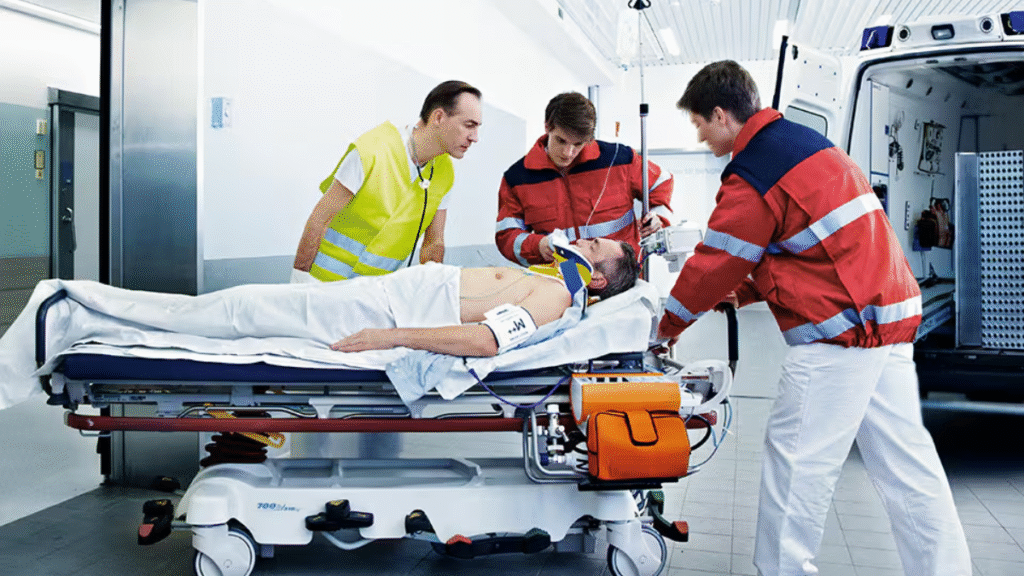

When sudden accidents, life-threatening illnesses, or unexpected complications strike, emergency care in hospitals becomes the lifeline for patients. Emergency departments (EDs) function 24/7, providing immediate, critical care for conditions ranging from heart attacks and strokes to traumatic injuries and severe infections. Their mission is clear: stabilize patients, save lives, and provide timely treatment when every second counts.
Emergency care is more than just fast-paced medical intervention. It represents the intersection of advanced medical expertise, technology, teamwork, and compassion. This article explores the role of emergency care in hospitals, its importance, processes, challenges, and the life-saving difference it makes every day.
The Role of Emergency Care in Healthcare Systems
A frontline for critical health needs
Emergency departments serve as the frontline of healthcare. Patients arrive through ambulances, walk-ins, or referrals when their health deteriorates suddenly. The ED’s responsibility is to rapidly assess and prioritize care based on urgency.
Gateway to hospital services
Emergency care often acts as an entry point to the broader hospital system. Patients stabilized in the ED may be admitted for surgery, intensive care, or specialized treatment.
Protecting public health
Beyond individual emergencies, hospital emergency care plays a role in disaster response, pandemics, and mass casualty events — ensuring resilience for entire communities.
Key Components of Emergency Care
1. Triage: Prioritizing Urgency
Triage is the process of categorizing patients based on the severity of their condition. For instance:
- Red (critical) — life-threatening emergencies like cardiac arrest, severe trauma, or stroke.
- Yellow (urgent) — serious but not immediately fatal conditions such as fractures or deep wounds.
- Green (non-urgent) — minor injuries and illnesses.
This system ensures that resources are directed where they are needed most.
2. Rapid Diagnosis
Emergency care requires swift diagnostics, including:
- Blood tests and imaging (X-ray, CT, MRI).
- ECGs to detect cardiac events.
- Point-of-care testing for immediate results.
3. Immediate Interventions
Common interventions include:
- CPR and defibrillation for cardiac arrest.
- Clot-busting drugs for stroke.
- Trauma stabilization (airway management, bleeding control).
- Emergency surgeries (appendectomy, C-section, trauma surgery).
4. Multidisciplinary Teams
EDs rely on collaboration among doctors, nurses, paramedics, respiratory therapists, radiologists, and pharmacists. The seamless teamwork often makes the difference between life and death.
5. Technology in Emergency Care
Advanced tools support rapid response:
- Automated external defibrillators (AEDs).
- Telemedicine consultations with specialists.
- AI-driven predictive systems for patient deterioration.
- Portable ultrasound machines.
Common Emergencies Treated in Hospitals
- Cardiac emergencies — heart attacks, arrhythmias, cardiac arrest.
- Neurological emergencies — strokes, seizures, head injuries.
- Trauma cases — road accidents, falls, gunshot or stab wounds.
- Respiratory emergencies — severe asthma attacks, pneumonia, respiratory failure.
- Infections — sepsis, meningitis, severe cellulitis.
- Obstetric emergencies — complicated labor, ectopic pregnancy, postpartum hemorrhage.
- Pediatric emergencies — high fevers, dehydration, choking.
- Toxicological emergencies — poisoning, overdoses, chemical exposures.
The Process of Emergency Care in Hospitals
Step 1: Arrival and Registration
Patients arrive by ambulance or walk-in. Registration systems document patient details quickly, often while clinical assessment begins.
Step 2: Triage Assessment
Trained triage nurses categorize patients by urgency. This ensures critical cases bypass queues.
Step 3: Stabilization
Immediate interventions focus on stabilizing vital functions: breathing, circulation, and neurological status.
Step 4: Diagnosis and Treatment
Doctors perform rapid tests, imaging, and physical exams to identify the cause. Treatments are initiated immediately to prevent deterioration.
Step 5: Admission or Discharge
- Admitted to ICU, surgery, or specialized wards if ongoing care is needed.
- Discharged with follow-up instructions for less severe cases.
The Importance of Emergency Care
Saving lives in critical moments
Emergency care ensures patients receive life-saving interventions within the “golden hour,” where timely action dramatically improves survival.
Preventing complications
Early stabilization prevents conditions from worsening — e.g., administering clot-busting drugs for strokes within hours prevents long-term disability.
Reducing healthcare disparities
Emergency departments are often the most accessible entry point for marginalized communities who may not have regular access to healthcare.
Public confidence in healthcare
Knowing that emergency care is available 24/7 builds trust in the healthcare system.
Challenges in Emergency Care
Overcrowding
EDs often face overwhelming patient volumes, leading to long wait times and strain on staff.
Limited resources
Shortages of staff, equipment, or beds can compromise response times and outcomes.
Burnout among healthcare workers
High stress, long hours, and exposure to traumatic events increase burnout risks.
Financial barriers
Uninsured patients or those with limited means may delay seeking emergency care, worsening outcomes.
Violence and security risks
Emergency staff sometimes face aggression from stressed patients or families. Hospitals must ensure safe environments.
Innovations in Emergency Care
Tele-emergency medicine
Remote consultations with specialists support smaller hospitals in managing complex cases.
AI and predictive analytics
AI helps predict patient deterioration, prioritize triage, and optimize resource allocation.
Portable diagnostic devices
Handheld ultrasound and point-of-care lab tests speed up diagnosis.
Simulation-based training
Emergency teams use high-fidelity simulation labs to practice handling critical scenarios.
Community integration
Hospitals partner with EMS (emergency medical services) to streamline pre-hospital and in-hospital care.
Case Studies
Case 1: Stroke Rapid Response
A hospital implemented a “stroke code” system where suspected stroke patients received CT scans within 15 minutes of arrival. Result: reduced disability rates and improved recovery outcomes.
Case 2: Trauma Center Excellence
A level-1 trauma hospital collaborated with local EMS to create a streamlined trauma protocol. Mortality rates from severe road accidents dropped by 25%.
Case 3: Pediatric Emergency Care
A children’s hospital developed child-friendly emergency units, improving both outcomes and family satisfaction.
The Future of Emergency Care
- Smart triage systems using AI to predict urgency more accurately.
- Mobile emergency units with advanced diagnostics deployed in rural or disaster-prone areas.
- Integration with wearable devices to transmit patient data to hospitals before arrival.
- Focus on mental health emergencies with dedicated crisis response teams.
- Global collaboration to share best practices and disaster response strategies.
Conclusion
Emergency care in hospitals is the cornerstone of modern healthcare systems. It provides life-saving interventions, stabilizes patients in critical conditions, and offers reassurance that help is available at any hour. Beyond rapid treatment, emergency departments symbolize resilience, teamwork, and community trust.
While challenges like overcrowding and staff burnout remain, innovations in technology, training, and collaboration continue to strengthen emergency care. Ultimately, the mission of emergency care remains timeless and unwavering: saving lives every day.
FAQs
1. What is the golden hour in emergency care?
The golden hour refers to the critical 60 minutes after a traumatic injury or life-threatening event when immediate medical care significantly increases survival chances.
2. How are patients prioritized in emergency departments?
Through triage, where patients are classified based on urgency. Critical cases are treated first, regardless of arrival time.
3. What is the difference between urgent care and emergency care?
Urgent care handles minor issues like sprains or infections, while emergency care deals with life-threatening or severe conditions like strokes, trauma, or heart attacks.
4. How do hospitals prepare for mass casualty events?
Hospitals run disaster drills, stockpile emergency supplies, and coordinate with EMS, fire, and law enforcement for efficient large-scale response.
5. Can anyone go to the emergency department?
Yes. EDs provide care regardless of insurance status or ability to pay, though policies vary by country. Patients with non-life-threatening issues may experience longer wait times.