
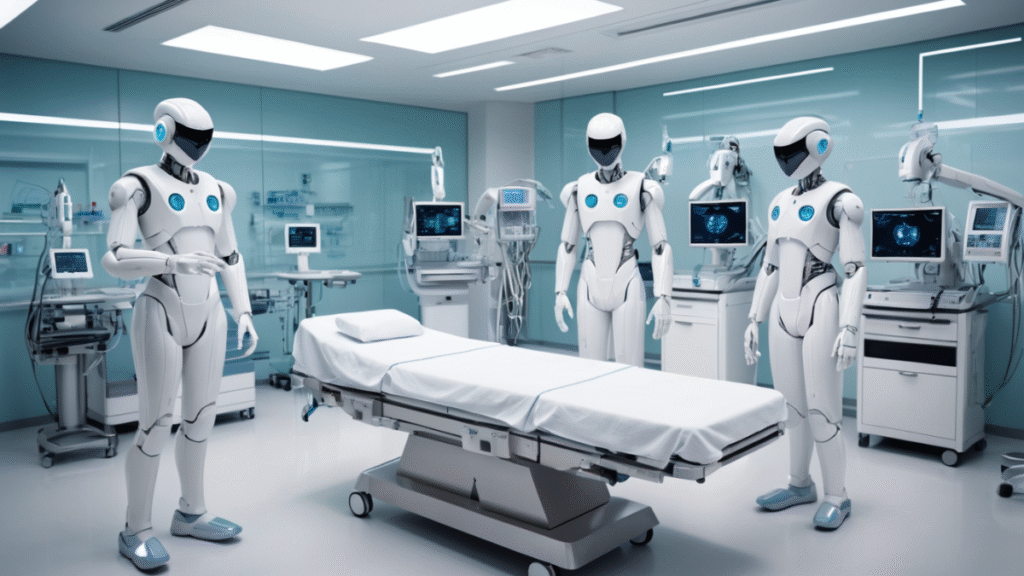

Hospitals have always been at the forefront of medical innovation. From life-saving surgeries to advanced diagnostic imaging, technology has transformed the way patients receive care. Now, with artificial intelligence (AI), robotics, and smart healthcare systems, hospitals are entering a new era — one where medicine becomes more precise, efficient, and personalized than ever before.
The future of hospitals will not just be about treating illness but about predicting, preventing, and personalizing care using advanced technology. This transformation will redefine the patient experience, streamline hospital operations, and empower doctors with unprecedented tools. In this article, we will explore how AI, robotics, and smart healthcare systems are shaping the hospitals of tomorrow.
The Rise of Smart Hospitals
Defining smart healthcare
A smart hospital integrates digital technologies, connected devices, and intelligent systems to improve efficiency, patient care, and outcomes. Smart healthcare combines AI, machine learning, robotics, Internet of Things (IoT), and big data analytics into everyday hospital operations.
Why smart hospitals matter
- Patient-centered care — technology enables highly personalized treatment.
- Operational efficiency — automation reduces human error and speeds up processes.
- Cost savings — predictive analytics lowers unnecessary procedures and readmissions.
- Better outcomes — faster diagnoses and improved treatment accuracy.
Artificial Intelligence (AI) in Hospitals
1. AI for Diagnosis and Imaging
AI algorithms analyze X-rays, MRIs, CT scans, and pathology slides with remarkable accuracy. In some cases, AI can detect tumors or abnormalities earlier than human radiologists.
Examples include:
- AI in cancer detection.
- Early identification of strokes or cardiac issues.
- Automated image analysis to reduce diagnostic delays.
2. Predictive Analytics and Preventive Care
AI uses large datasets to predict patient risks. For example, it can forecast which patients are at risk of sepsis, diabetes complications, or heart failure, enabling early intervention.
3. Personalized Medicine
AI analyzes genetic data, medical history, and lifestyle patterns to create custom treatment plans tailored to individual patients. This approach ensures higher success rates and fewer side effects.
4. Virtual Assistants and Chatbots
Hospitals are using AI-powered chatbots to handle patient inquiries, schedule appointments, and provide health education, reducing the workload on staff.
5. Hospital Operations Optimization
AI helps manage resources like ICU beds, operating room schedules, and staff rotations more efficiently, ensuring smooth hospital operations.
Robotics in Hospitals
1. Robotic Surgery
Robotic-assisted surgery allows for smaller incisions, less blood loss, and quicker recovery times. Surgeons use robotic arms with extreme precision to perform complex procedures in cardiology, neurology, and orthopedics.
2. Rehabilitation Robots
Patients recovering from strokes or injuries benefit from robotic exoskeletons and therapy machines that assist mobility and speed up rehabilitation.
3. Service Robots
Hospitals are deploying robots to deliver food, medications, and supplies to patients, reducing staff workload and minimizing infection risks.
4. Disinfection Robots
Robots using UV light or advanced cleaning systems can sterilize rooms quickly and effectively, preventing hospital-acquired infections.
5. Elderly and Patient Care Robots
Robots designed for elderly care provide companionship, remind patients to take medications, and monitor vital signs, ensuring continuous support.
Smart Healthcare Systems
1. Internet of Medical Things (IoMT)
Connected devices, such as wearable monitors, smart beds, and infusion pumps, continuously track patient health and send real-time data to doctors and nurses.
2. Telemedicine Integration
Hospitals are combining smart systems with telemedicine platforms, allowing patients to access specialists without traveling. Remote monitoring tools also ensure follow-up care outside hospital walls.
3. Big Data and Cloud Computing
Hospitals use big data analytics to track disease outbreaks, optimize hospital workflows, and improve clinical decision-making. Cloud systems make patient records easily accessible while maintaining security.
4. Smart Infrastructure
Smart hospitals use energy-efficient lighting, automated HVAC systems, and sensor-driven facilities to improve sustainability while ensuring patient comfort.
5. Blockchain for Security
Blockchain technology ensures patient data is secure, transparent, and tamper-proof, addressing rising concerns about cybersecurity in healthcare.
Benefits of AI, Robotics, and Smart Systems in Hospitals
- Improved accuracy in diagnosis and treatment.
- Faster recovery times due to robotic surgery and personalized care.
- Reduced hospital-acquired infections through automated sterilization.
- Operational efficiency with AI-driven scheduling and logistics.
- Enhanced patient experience through personalized care and real-time monitoring.
- Cost reduction in long-term hospital operations.
- Increased accessibility with telemedicine and IoMT devices.
Challenges and Ethical Considerations
1. High Implementation Costs
Smart hospital technologies require heavy investment in infrastructure, training, and maintenance.
2. Data Privacy and Security
With vast amounts of patient data being collected, cybersecurity risks remain a significant challenge.
3. Workforce Adaptation
Doctors, nurses, and staff must be trained to work with AI and robotics effectively. Resistance to change can delay adoption.
4. Ethical Dilemmas
Reliance on AI raises ethical concerns — who is responsible if an AI-driven decision harms a patient? Clear guidelines and accountability are necessary.
5. Accessibility and Equity
There is a risk of widening the healthcare gap if advanced hospitals are only available in wealthy regions, leaving underdeveloped areas behind.
Case Studies
Case 1: Robotic Surgery in Cardiology
A leading hospital successfully implemented robotic systems in heart surgeries, reducing patient recovery times by half.
Case 2: AI in Radiology
Hospitals using AI imaging software reported faster cancer detection and improved treatment outcomes.
Case 3: Smart Beds in ICUs
Smart beds equipped with sensors helped monitor patient movement, preventing bedsores and falls, while alerting nurses in real-time.
Case 4: Disinfection Robots During the Pandemic
Hospitals deployed UV disinfection robots to sanitize wards, lowering infection rates and protecting staff.
The Future Outlook
The hospitals of tomorrow will be hyperconnected, AI-driven, and robotics-assisted, offering a seamless blend of human expertise and machine intelligence.
Future trends include:
- AI doctors assisting in routine checkups.
- Fully robotic surgical suites.
- Predictive hospitals that anticipate patient needs before arrival.
- Global smart healthcare networks connecting hospitals worldwide.
- Green and sustainable hospitals powered by renewable energy.
The combination of human compassion with advanced technology will create a holistic, patient-centered model of care.
Conclusion
The future of hospitals is being shaped by AI, robotics, and smart healthcare systems, promising a world where healthcare is faster, safer, and more effective. While challenges such as cost, ethics, and data security remain, the benefits are undeniable.
These technologies are not meant to replace doctors or nurses but to enhance their capabilities, reduce burdens, and ensure patients receive the best possible care. As hospitals evolve into smart, connected ecosystems, the goal will always remain the same: to save lives, improve well-being, and create healthier communities worldwide.
FAQs
1. How is AI used in hospitals today?
AI is used for diagnosing diseases, predicting patient risks, managing hospital resources, and enhancing personalized treatment plans.
2. What are the advantages of robotic surgery?
Robotic surgery provides greater precision, smaller incisions, less pain, faster recovery, and reduced complications for patients.
3. What are smart healthcare systems?
Smart healthcare systems integrate IoT devices, big data, AI, and cloud technologies to streamline hospital operations and improve patient care.
4. Are smart hospitals expensive to build?
Yes, they require high initial investments, but long-term savings and efficiency gains often outweigh the costs.
5. Will AI and robots replace doctors in the future?
No. AI and robotics will support doctors by handling repetitive tasks and providing insights, but human expertise and compassion remain irreplaceable.